
|
|
 |
|

| Issue 34: | Sept. 2026 |
| Essay: | 3,476 words |
| Citations & Notes: | 895 words |
Essay by Kendall Johnson
Photographs by Susan Ilsley
About Those Fireflies
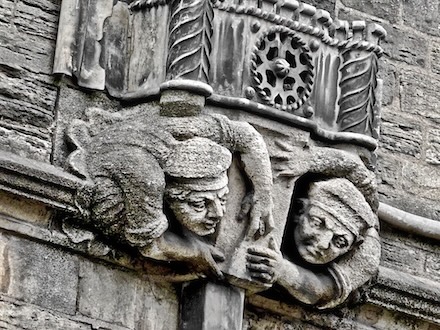
World Upside Down I (2019) © by Susan Ilsley1
The world is dark and growing darker by the newscast. Political corruption and fracture, war abroad and at home, ecological death spiral—so many of us are tempted to slide into despair.2 But not everybody. Some find ways to carry on, to turn their hardship into inspiration. Like lighthouses guiding the lost, their actions spark light within us to keep going.
Fireflies, I call them. Late one night in Nashville, I was finding my way back to my hotel after an evening of honky tonk. It was dark, and I was passing the campus of Vanderbilt University with all its looming trees. First one light appeared, then many. How different the darkness then felt.
All through the writing of my fifth collection of Fireflies,3 poetics about people overcoming obstacles, I kept asking myself Why? Not why they persisted in their struggles, but why was I so enraptured by such stories that I was working on yet another collection? I knew what I wanted to show, to sing about, but I realized I was still missing something. I was being called into wonder again, to figure out what, beyond the endurance and grit, these stories could still teach.
Yet I’m finding it’s the fireflies who showed up along my own path, the ones I’ve watched most closely, who are now teaching me more and more. I want to share more about them, how we met, and some of the things I’ve learned.
I. Tending the Earth
Descending the stairs into my small, usually quiet gallery, I was surprised to find it humming with people. Chairs were set up, an event was clearly unfolding, and—as Director—I had absolutely no idea what it was. A young man approached me and asked, “Hey, man. Who did these paintings and the writings with them? They’re cool!” I muttered a quick mea culpa and asked what was happening. “A poetry reading,” he announced, “overflow from upstairs. The San Gabriel Valley Literary Festival. Join us,” he added. “We’d love to have you read.”
The paintings were textured abstracts, the writings fragments of memory. I had been trying to uncover lost pieces of combat from Vietnam years ago. I relented and read. Despite years of public speaking, I struggled and choked my way through the raw intimacy of the words. I realized right then I was on to something, a crossing of some Demilitarized Zone.
Later, joining the group afterwards, I met John Brantingham and his wife, Ann. An English professor at a local college, he handed me his alternative business card: poetry editor at Chiron Review. I had no idea what that chance encounter would mean for my life. It sparked a sea change in my writing, seminars in the Sierras, presentations at conferences, and workshops among new friends that led to publication in literary journals—and eventually, a contributing editorship at his new Journal of Radical Wonder.4
The man proved to be a lightning rod in my life, and a firefly to many. As Dr. Seuss once wrote, “Oh, the places you’ll go!”5 ... and the wonders you’ll see.
John’s Story
No wonder John was drawn to English literature and writing. His degrees in English and Fine Arts prepared him for University, but he found his teaching home in community college. As a poet, he published and edited internationally, but as a teacher, he was a purveyor of wonder.
He also fought chronic underfunding and overcrowding, confounding bureaucratic ineptitude, and his frequently burned-out colleagues. Then thrust into administrative duties, John became the buffer between an increasingly bureaucratic upper leadership and increasingly frustrated and bullied teaching staff. The only thing that made it worthwhile was his love of his students, the pleasure he took accompanying them in their explorations, and the support he could provide to exploited new teachers. John also found a way to take care of himself.
In the summers, he and his beloved Ann camped in Sequoia Kings Canyon National Park: he as the Park’s Inaugural Poet Laureate, she as Artist in Residence, both teaching radical wonder from the wild. There, among the big trees, walking sharp ridges, sharing delight with others, he found home. In a world seeking commercial product, John Brantingham invited artists and writers to share his discoveries—of the world, and of themselves.6
John taught me:
- Fireflies live responsibly for the earth around them.
- Fireflies model life-affirming action, by following their own joy.
- They light paths for others by simply being who they are.
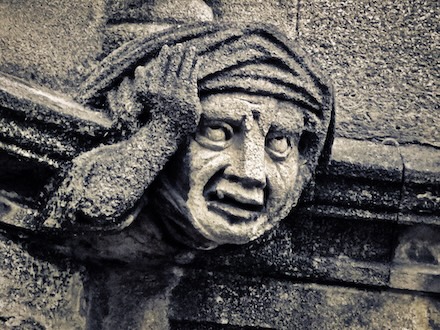
World Upside Down II (2019) © by Susan Ilsley7
II. Bearing Witness
“Try Arroyo Seco Press,” John suggested several times at a writers’ workshop in Pomona. I was intimidated. “Small but impressive, and Thomas Thomas runs a quality journal,” John said; “I think he’d like your stuff.” I finally worked up my nerve. I’d been working on a three-voice set of poetics that aimed to illuminate glimmers of light in all of the darkness.
I discovered that he was right. Arroyo Seco was a perfect home for the Fireflies series, and Thomas offered just the right combination of gentle guidance and encouragement. His editorial suggestions honored my developing writing, and they were always well taken. Most of all, Thomas’s encouragement pulled me along.
Not only has the Fireflies series expanded, but also at his urging I wrote, and he published, a coming-of-age memoir collection about growing up in a citrus grove being overrun by Southern California’s mass urban development. That later fed into a more comprehensive project. Amazed by the breadth of his writers and the depth of their subject matter, I’m delighted to be included.
Thomas’s Story
Growing up in the suburbs of Los Angeles where housing developments and fast-track communities swallowed citrus groves and brushland, Thomas R. Thomas resists encroaching anonymity. A career in engineering found lacking, Thomas turned to the literary scene in the nearby port town of Long Beach where the ghosts of gritty urban poets persist, and academic elites are shouldered aside.
As the literary world lost ground to mega publishers and glitzy sound bites, authentic voices became lost in the market place, but Thomas found them out. At poetry readings he listened for the diamonds in the rough. His Arroyo Seco Press publishes raw, accessible poetry, memoir, and flash fiction, allowing both seasoned and new local artists an opportunity to find print. His editorial eye seeks the authentic over the trendy, the music over the packaging, leaning into the real and overlooked.
Thomas sits in his Long Beach tract home, against the hum of trucks on the 710 freeway, laying out the next project; an ephemeral voice that might otherwise be lost.8
Thomas taught me:
- Fireflies notice exemplary others.
- They work to bring that out even more.
- Fireflies honor others’ stories, told or yet untold.
III. Tenacity
How many times had I gotten myself in trouble, resigned myself to oblivion, then found my body taking over and dragging me out? How many times had I witnessed others, in lethal circumstance, with no apparent possibility of surviving, struggle on and sometimes, somehow survive?
I met Eric Barr through our friend Stephanie Barbé Hammer. We owe her so much for introducing him to our small writing group. A former University of California professor, actor, and writer, Eric infuses our group with an undeniable life force.
His is a story of grit, of transcendence and triumph. Narrowly surviving a medical catastrophe, Eric clawed his way back to a life that—while different from his past—is rich with optimism and determination. His sharp editorial eye and fresh perspectives guide us as we follow his new series of poetry. These poems serve as beacons to those who are lured, by dark circumstance, to give up.
Eric knows that if you have only one life to live, you must give your absolute best, pull out all the stops, and share that light with others. Having danced on that same edge, I too know the siren song of surrender. It is in encountering the Erics of the world that I remember just how critical the fight remains.
Eric’s Story
Waking from cardiac surgery was the good news. But two days later it turned from pain to nightmare. Infection had triggered a massive stroke and Eric Barr’s previous life ended. Paralyzed, confused, near death, Eric Barr surfaced to a world he didn’t know.
His road back would not be to anywhere he’d ever been. He couldn’t walk, hold things, or swallow. He was still who he was, but his old world was gone. His position as university professor, actor, playwright, who could teach. Gone.
He still had someone who loved him. And a new theater student to coach—himself. Learning to sit, to wheel, to reach. Inch by inch. Year by year. Learning to speak again, to write.
Eric Barr wheels out onto a newly darkened stage: he has something he now must share. Maybe the most important thing there is to ever know. How to pick yourself up in the face of massive loss. How to go on anyway, step by impossible step.9
Eric taught me:
- Fireflies recognize the fierce drive of the body.
- They appreciate the will to make meaning.
- Fireflies model it through the way they face adversity.
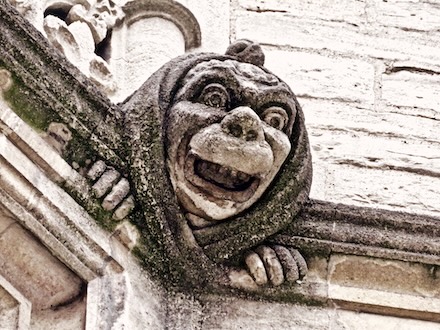
World Upside Down III (2019) © by Susan Ilsley10
IV. Standing Close
Who speaks for those losing their voice? In the face of diminishing light, those with declining facility face confusion and loss. Who helps light their darkening paths?
I met Kate Flannery in the years following a precipitous crisis that shattered her carefully constructed life. She told me stories: amazing fragments of memories and dreams, a childhood set in a logging town along coastal Oregon, and tales of the friends and associates she’d known since. I knew these pieces had to be preserved, and I sensed they might only be the beginning. She began to write.
John Brantingham welcomed Kate into his writing classes, and Thomas R. Thomas became interested as well. Her stories sharpened, and her resolve to make sense of life’s welter deepened. She joined me in a writing group—initially spun off from John’s classes—alongside Thomas R. Thomas and author Stephanie Barbé Hammer. Kate’s collaboration has been invaluable.
With her writing now published in a number of journals, Kate is on the trail of a larger project, weaving women’s issues through memoir, a deep love of music drawn from her family’s training, and her keen observations of the natural world. Which holds immense promise.
It isn’t always that simple, however.
Kate’s Story
Most of her friends having checked into retirement centers, and despite being able to afford doing so herself, Kate Flannery persists in her law practice. And at no small expense. During the past decade she has become a writer, published, with a project that commands her interest and calls for attention. Yet every day she continues to serve her clients.
An estate attorney, Kate assists clients in dealing with diminishing capacity, anticipating medical decisions, negotiating the courts. She helps the family—whose vision is sometimes compromised by grief or self interest—accept the wishes of the departing.
Elusive passwords, shifting pressures and demands, virtual new worlds and deceitful sales traps, all conspire to consume fixed incomes and dwindling resources. Kate acts to protect her clients and to light paths for those groping in the growing dark.
Yet she feels torn. Her chance to make sense of her own confusing life calls, to write the truths she has learned over her years, to share the music she’s heard from birds and the paths she’s seen them trace.
In the face of a fracturing world, Kate Flannery pens a binding codicil for a fading light.11
Kate taught me:
- Fireflies make life-affirming choices, sometimes affirming others first.
- They accompany, assist, and affirm, and act in behalf of others.
- Fireflies stand close to those they appreciate.
V. Weaving Community
For every star in the spotlight, dozens back them up. From those attending to logistical needs and handling a myriad of difficulties, to those providing emotional support, all make the performance possible. A prime example is a good editor. I met Clare MacQueen through another John-based connection, when I was fortunate enough to interview writer Joy Ladin. MacQueen’s Quinterly published a related essay (in Issue 18, April 2023), a number of subsequent essays, and two printed collections of those pieces.
Clare opened a portal for me, launching my work toward a larger, more sophisticated and engaged audience. More than a publisher, Clare has become a muse, a support, and a fellow pilgrim on our shared journey toward voicing the spirit so often missing in the current madness. She gives me print space, and I endeavor to give her the substance she seeks for her readers. We collaborate.
And it isn’t just me. Clare enlivens the work of her writers and artists with the creativity of others. She orchestrates her issues, prompting connections between disparate voices. The collective term for fireflies is a sparkle, and I’m delighted to be part of hers.
Clare’s Story
Clare MacQueen brings a particular energy to her one-person online journal focusing on literature and art. Not dependent upon funding or grants, nor beholden to parent corporations, distant editorial boards, or decision making by profit margin, Clare intentionally stays small. Thus loosened from the binds of contemporary publishing constraints, she is free to publish what she knows best: good literature of lasting value. And to do it well, taking care in layout and formatting to add to the power of each piece.
MacQueen’s authors and artists include those with high profile as well as those only now becoming known. Her primary goal is to make positive contributions to the culture during a time of increasing darkness. She has become known for championing writers and artists she believes add to the light.
Yet she does more than showcasing talent. The pieces in each issue speak to one another. As do her authors and artists. Through editorial choice she composes conversations, between authors, literary forms, and those who read them. Meanings emerge through juxtaposition, changing the way the next piece is read. Connection is enlarged between people and ideas. Stars in the night sky shine within constellations.
Clare MacQueen, curator of community, a salon.12,13
Clare taught me:
- Fireflies often avoid spotlights.
- They derive satisfaction from the combined chemistry of others.
- Fireflies create and sustain community.
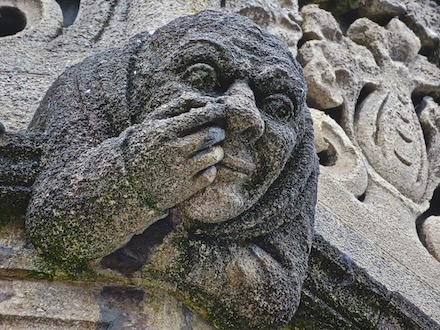
World Upside Down IV (2019) © by Susan Ilsley14
VI. Mending the Net
I met Susie Ilsley when we were both recovering from trauma—I from nursing my former wife through end-stage cancer, and she from escaping an abusive marriage.15 While pain is rarely a solid foundation for a relationship, in our case shared need transformed into readiness. It was relational wildfire.
Yet our connection contained more than heat; we became channels for each other’s personal unfolding. Mutual support became the springboard for my expressive artwork and writing. Freed from the anchors of a painful past, Susie turned latent potential into vibrant action.
I’ve had the privilege of witnessing a survivor blossom into a community leader, bringing hard-won insight to organizational vision. Her expanding, international community stands to gain.
Susie’s Story
Susie Ilsley was taught to feel small. Mocked as silly and inconsequential by fiercely competitive older bothers, “Goose” weathered constant harassment. Her overwhelmed parents, absent at home, protected themselves through distance. Susie the “troubled one” was left adrift.
Shattered by a catastrophic car accident, Susie was forced to drop out of college. She married an abusive narcissist who starved her through manipulative budget restrictions. Her church offered bread through their soup kitchen, but abandoned her when she filed for divorce.
Yet her resilient spirit surfaced through the trials of solo parenting. She engineered community co-ops, built a Honolulu breast clinic’s radiology wing, and climbed to semi-pro status at the tennis club where she taught preschool. Her ultimate test arrived with her abusive ex-husband’s terminal illness—when the husband’s new wife could not, Susie chose to nurse his final days with quiet grace.
Upon return to her home town, Susie turned this hard-won grace outward. Joining the local Rotary Club, she injected it with vibrant new life. Through determined self study, she helped revamp the club’s confusing finances and procedures, and was elected its President. Her favorite project: spearheading support for Kolkata’s Piyali Learning Center, helping girls from impoverished backgrounds avoid sexual slavery.
Susie carries an attitude of appreciation. Through her I’m learning to open to others, to situations, with a less critical attitude. Against my own tendency toward darkness (well earned perhaps, but not always helpful), this helps me see people, things, circumstance, with a more realistic eye.16
Susie taught me:
- Fireflies look, and see, with appreciation.
- They ask, “What am I missing; how can I see more?”
- Fireflies live hope.
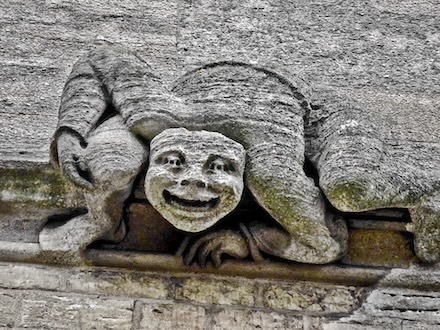
World Upside Down V (2019) © by Susan Ilsley17
VII. Drawing Near
Before I met Susie, I first met Father Bill Moore. As a gallery director in Pomona, I ran into my friend George, a framer, who noticed how exhausted I had become. My periodic trips to New York to consult as a trauma psychologist after 9/11 were draining my spirit. “Go see Father Bill’s paintings,” George suggested, and I did.
Transformation sometimes sneaks up unexpectedly. His studio was a sanctuary. Fr. Bill’s vast abstracts radiated an energy that slipped past my skepticism and critical mind, the glow from his work piercing my carefully defended heart. We visited now and then, talking about New York and Vietnam, but never directly. Nor did we talk about beliefs.
In all our subsequent visits, Fr. Bill would look at my emerging paintings, always pointing to the best parts. He never once explained or told me what to think of his work, or of his mission in Pomona.
He didn’t need to.
Father Bill’s Story
Sent by his order to minister to the forgotten core of Pomona, California amidst iron-fortified storefronts, cracked asphalt, litter and broken glass, Fr. Bill Moore’s painting studio served as sanctuary.
His rich abstract paintings lined the walls and cast a warming glow through tall windows into the darkened street. The order sold the paintings to fund welfare projects such as Molokai, the island Leper colony, served by Fr. Damian, another member of the order, now deceased. Other such projects fed and cared for the impoverished in other countries.
In Pomona, however, when visitors off the tired street entered Fr. Bill’s studio, he would not explain or interpret the work, but stand quietly beside the visitor sharing the moment, gazing at the piece of art bigger than them both. The artist’s role there was less author of the work, more the steward inviting participation in mystery.
Fr. Bill Moore, attending to the conditions under which the light becomes visible.18
Fr. Bill taught me:
- Fireflies point out the implicit stories beneath the surface.
- They teach how to see our own and the world’s stories as mirrors.
- Fireflies model presence in listening and looking closely.
Reflecting Light
What lessons can writers and artists learn from these fireflies, about becoming light against darkness? How can we turn from complaint to resistance? I found my final act in writing Fireflies in America was less a closing summary statement, more an invitation:
Fireflies empower. They teach. They embody hope. If we are creative artists—be it through visual arts, music, movement, or writing—our work can carry that spirit to others. The question we must answer is: through what we say and how we say it, are those around us pulled forward?
Fireflies show us that what we do matters. From them I’ve learned that it is important when adding our efforts to the world, our writing or making art or encouraging others, that we:
~ focus on life lived, not media tropes or newscasts;
~ understand meaning to be an extension of life’s reaching for itself;
~ bear witness to the world as a privilege and a joy;
~ know that while feelings are important, we live in the world;
~ realize the power of turning attention to others;
~ remember that asking says more than telling; and
~ always look for the light however faint.19
Embedded in a fractured world, we in America are confronting questions about truth, and about our identity as a people. Despite this additional burden exacerbated by global crisis, we can see fireflies refusing to fall into despair. Somehow they endure by finding meaning, and in turn find unexpected strengths to continue. More than that, their subsequent contributions in turn strengthen our community.
In my experience, hope isn’t just a feeling, a faint prayer against darkness. As has been pointed out by others, hope is an animal spirit, wild, irrational. It flies in the face of darkness, acts without reason, doesn’t wait for abstraction or warrant. Hope has feathers20—but also claws and teeth.
Citations and Notes:
Links were confirmed on 16 September 2026.
- Susan Ilsley. World Upside Down I (2019), photograph taken in Oxford, UK. These medieval stone carvings, known as Grotesques, adorn public buildings, and are generally placed above the line of sight of the solemn civic and religious notables. The stone masons were famous for satirizing such notables mercilessly, and their levity can be seen as a form of class resistance. In this sense, they may be seen to be early fireflies, leveling cultural counter-text as architectural marginalia.
- Author’s Note: I’ve seen despair, in my own life and others. As a combat veteran and on-scene disaster consultant who has watched, sometimes held dying victims in my arms, I’ve witnessed the precise moment that the internal architecture of persistence collapses. In the burn unit, on the shoulder of the highway, waiting for the medevac helicopter, in the dim light of the hospice room, the eyes change first and the light fades.
- Kendall Johnson. Fireflies in America: Songs for Our Dark Passage (Arroyo Seco Press, 2026).
- Author’s Note: For those who haven’t heard yet, John passed away unexpectedly earlier this year, to our great sadness and far too soon.
- Author’s Note: The last of Theodore Seuss Geisel’s books published during his lifetime, Oh! The Places You’ll Go was released by Random House on 22 January 1990, when Geisel was 86 years old. The book tells of resilience. Its author was an expert, having suffering multiple rejections of his unique work, post-traumatic stage fright, and suicide of his disabled first spouse.
- Kendall Johnson. Adapted from Section I: Tending the Earth, in Fireflies in America: Songs for Our Dark Passage (Arroyo Seco Press, 2026).
- Susan Ilsley. World Upside Down II (2019), photograph taken in Oxford, UK.
- Kendall Johnson. Adapted from Section II: Bearing Witness, in Fireflies in America: Songs for Our Dark Passage (Arroyo Seco Press, 2026).
- Johnson. Adapted from Section IV: Mending the Net, in Fireflies in America: Songs for Our Dark Passage (Arroyo Seco Press, 2026).
- Susan Ilsley. World Upside Down III (2019), photograph taken in Oxford, UK.
- Kendall Johnson. Adapted from Section III: Standing Close, in Fireflies in America: Songs for Our Dark Passage (Arroyo Seco Press, 2026).
- Johnson. Adapted from Section IV: Mending the Net, in Fireflies in America: Songs for Our Dark Passage (Arroyo Seco Press, 2026).
- Author’s Note: Salons are gathering places, cultural loci which encourage community among writers and artists to exchange ideas and share work. Some notable salons include those curated by writers Alice B. Toklas and Gertrude Stein in Paris, as well as the Harlem Renaissance Salons hosted by arts patron A’Lelia Walker, writer Zora Neale Hurston, and poet and playwright Georgia Douglas Johnson, among others. Those interested might enjoy reading these articles:
Annika Barranti Klein’s thumbnail history “What is a Literary Salon?” at Book Riot (1 March 2022):
https://bookriot.com/literary-salon/
Gina DeMillo Wagner’s more in-depth report with contemporary applications, “What is a literary salon (and why you should attend one)” (2 March 2025):
https://ginadwagner.substack.com/p/what-is-a-literary-salon-and-why
For an even deeper dive, the adventurous might consider “The Making of Visual Arts Policy and Artistic Advocacy in Late Francoist Spain,” Taylor Gray’s study of the role of underground salon resistance groups during Franco’s fascist regime in Barcelona. (Dissertation published by University of California San Diego, 2022. ProQuest ID: Gray_ucsd_0033D_21348. Merritt ID: ark:/13030/m5fn8b6t.) Retrieved from:
https://escholarship.org/uc/item/5xv0w0q0#main - Susan Ilsley. World Upside Down IV (2019), photograph taken in Oxford, UK.
- Author’s Note: In the interests of transparency here, I have a confession. At a low point in my life, Susie Ilsley rescued me. I needed a life raft, and she threw herself in. More than that, I saw in her a magic; and that glow pointed me toward north and led me home. Fortunately, I had the sense to marry her.
- Kendall Johnson. Adapted from Section IV: Mending the Net, in Fireflies in America: Songs for Our Dark Passage (Arroyo Seco Press, 2026).
- Susan Ilsley. World Upside Down V (2019), photograph taken in Oxford, UK.
- Kendall Johnson. Adapted from Section VII: Drawing Near, in Fireflies in America: Songs for Our Dark Passage (Arroyo Seco Press, 2026).
- Johnson. Adapted from Closing Benediction, in Fireflies in America: Songs for Our Dark Passage (Arroyo Seco Press, 2026).
- Author’s Note: Apart from its novel use of slant rhyme, unusual punctuation, and accepted form, Emily Dickinson’s poem “Hope is the thing with feathers” broke with larger social norms of the 1860s. Centering hope as an animal spirit rather than an abstract, church-dictated belief, she subverted the mores of her time:
https://www.poetryfoundation.org/poems/42889/hope-is-the-thing-with-feathers-314
Withdrawing from many of the “normal” social structures of the time, the poet described, in a single line, a woman in a traditional marriage as “Born — Bridalled — Shrouded”; for the complete poem, see White Heat: Emily Dickinson in 1862: A Weekly Blog:
https://journeys.dartmouth.edu/whiteheat/title-divine-is-mine-f194a-and-b-j-1072/
To Dickinson, hope must arise from within. For those intrigued, see the Poetry Foundation profile of this 19th-century firefly:
https://www.poetryfoundation.org/poets/emily-dickinson
Susan Ilsley
grew up in Claremont, California, a community famous for its interest in art. Her family was friends with artists/educators Millard Sheets, Milford Zornes, and Karl Benjamin. Museums have always been a central part of her family life. Her mother was a ceramics artist, and Susan studied ceramics at Whitworth University in Washington. While living in Colorado for 25 years, she worked in art education with special needs and preschool children.
Susan’s photographs have been shown in Pasadena, Pomona, and the Center for Digital Arts in Los Angeles. She describes her images this way: “I am especially delighted by the inconsistencies, contradictions, and contrapositions in the everyday world. In short, my work is intentionally ironic.”
| Copyright © 2019-2026 by MacQueen’s Quinterly and by those whose works appear here. | |
| Logo and website designed and built by Clare MacQueen; copyrighted © 2019-2026. | |
|
Data collection, storage, assimilation, or interpretation of this publication, in whole or in part, for the purpose of AI training are expressly forbidden, no exceptions. |
At MacQ, we take your privacy seriously. We do not collect, sell, rent, or exchange your name and email address, or any other information about you, to third parties for marketing purposes. When you contact us, we will use your name and email address only in order to respond to your questions, comments, etc.